Vision
Background
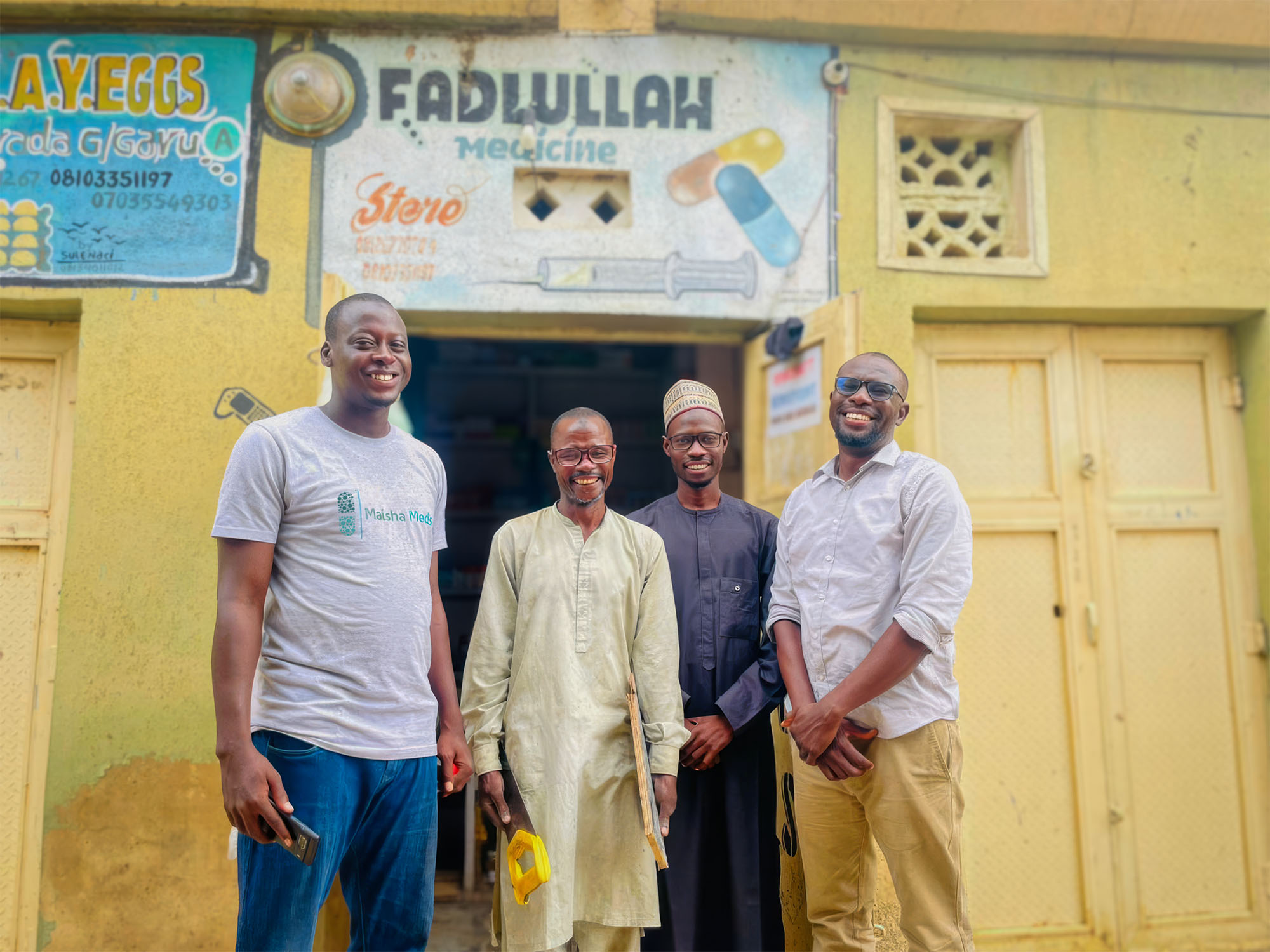
Hussaini Adam is a carpenter in his 50s who lives in Sharada, Nigeria. For years, he'd been running a successful carpentry business and providing for his family. But recently, things became difficult when he started struggling to see up close.
Over time, he couldn't read the small lines on his tape measure anymore, which made getting accurate cuts nearly impossible. He grew frustrated because his high standards for craftsmanship seemed to be slipping. He even wondered whether he'd have to retire from carpentry early and try to find another way to support his wives and children.
Hussaini has presbyopia, an age-related loss of near focus that affects a majority of adults over 40. Despite how common and treatable it is with eyeglasses, access to vision care across sub-Saharan Africa remains deeply limited. Optical shops tend to be concentrated in cities and too expensive for many people to afford. Some street vendors sell glasses, but they often lack the ability to screen customers properly and select the right lenses. Most people never get glasses at all.
For people like Hussaini, presbyopia isn't a minor inconvenience; it's a risk to their livelihood. Over 800 million people worldwide live with uncorrected presbyopia, which costs upwards of $25 billion in productivity every year. And the solution more than pays for itself, even on an individual level: A randomized controlled trial in Bangladesh found that median incomes grew 33.4% over eight months for people who received near-vision glasses.
Health leaders, including national eye health programs, are now looking toward private pharmacies and other community providers as one practical way to meet this unmet need. In many parts of the world, pharmacies are a common place to find reading glasses. But doing so in Africa means shaping an emerging market: People often don't realize they need glasses, pharmacies don't yet have experience screening or dispensing them, and governments haven't yet seen proof that pharmacy-based vision models can work at scale. What we're seeing now is that there's an enormous opportunity to close these gaps; the untapped demand is there, and so is the appetite for policy changes that will enable pharmacies to meet that demand.
Our Impact
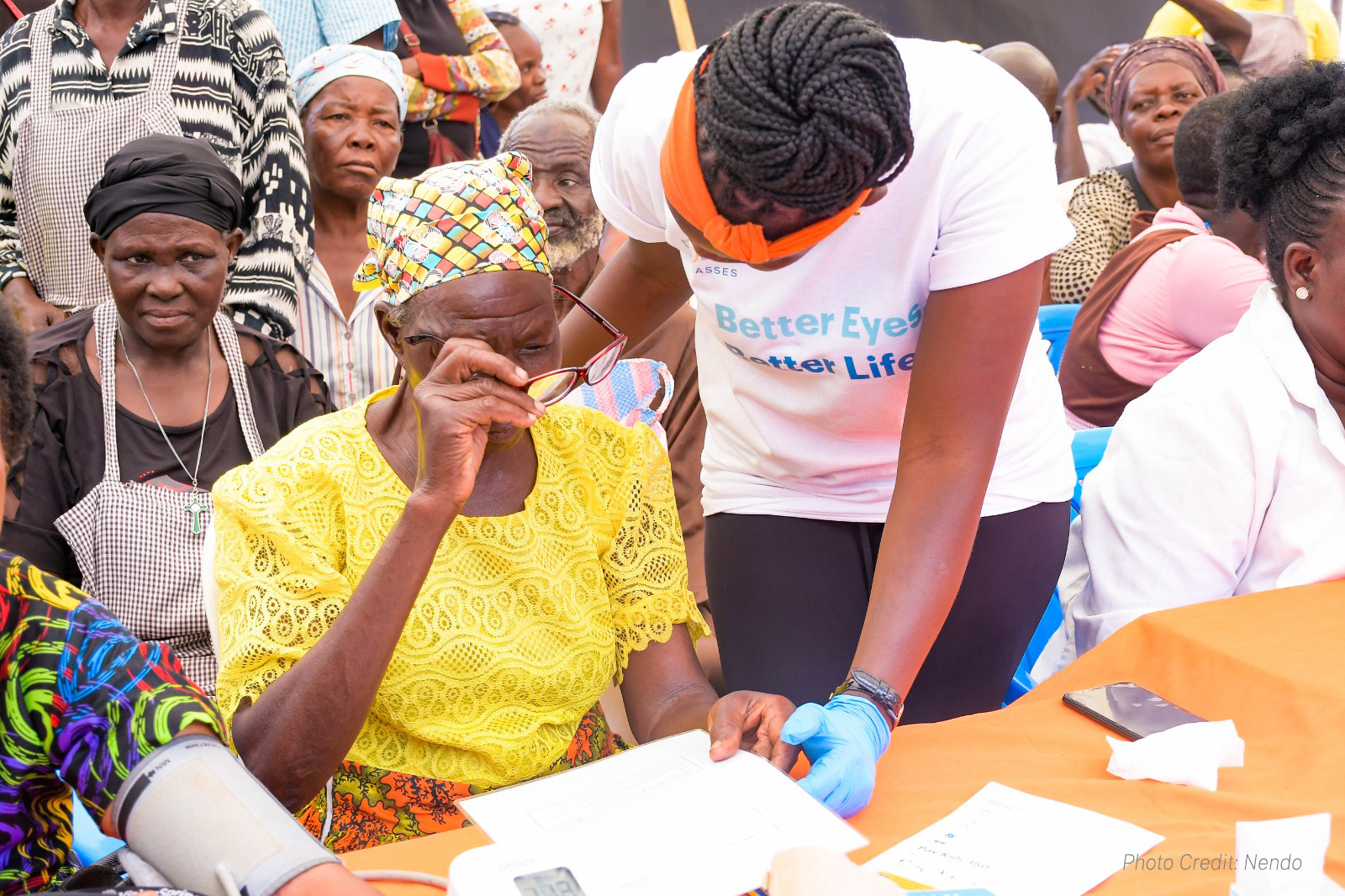
In 2024, we piloted our first vision program in Kenya, which screened 7,500 people and distributed over 5,600 pairs of glasses. The results exceeded our most optimistic expectations, and in 2025 we launched a major scale-up across Nigeria, Uganda, and Tanzania in partnership with the Livelihood Impact Fund and health ministries in each country.
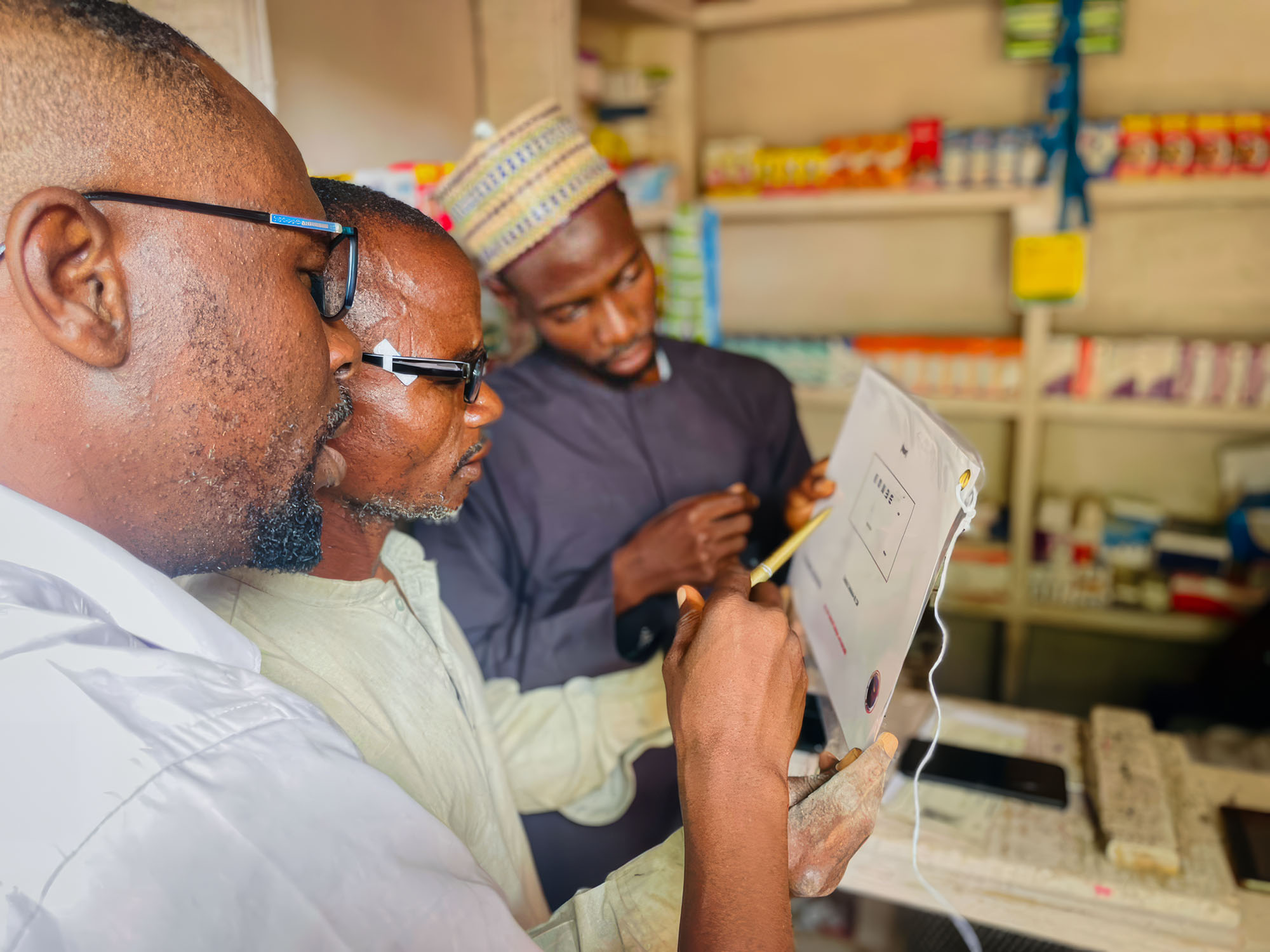
That's how Hussaini heard about the vision screening program at a nearby pharmacy that is part of our growing network in Nigeria. Staff screened him and fitted him with a simple pair of reading glasses. The moment he put them on, "everything changed," recounts Emmanuel Mshelia, a customer experience associate at Maisha Meds.
“The moment he put them on, everything changed. The smile on his face was huge. He could instantly read the text on his phone and, more importantly, he could see every tiny line on his measuring tape clearly again. It wasn't just fixing his sight; it was giving Hussaini Adam his confidence and his livelihood back.”
By the end of 2025, we had distributed over 60,000 pairs of glasses, putting us on track to break 100,000 in the first quarter of 2026. Over the full fifteen-month scale-up, we'll distribute a total of half a million glasses — with projections of several million pairs over the next couple of years.
Our path to half a million pairs of glasses
Per patient, excluding the glasses themselves.
Of recipients are wearing glasses for the first time.
Roughly even gender split among recipients.
As We Grow
We're building on growing evidence that pharmacy-based providers can effectively screen vision and dispense near-vision glasses — including making referrals to trained clinicians when needed. With few eye health professionals serving hundreds of millions of Africans with presbyopia, cost-effective alternative channels are needed to make real progress.
We're also learning and growing as an organization through this work. Because vision care is new territory for pharmacies and patients, demand generation has become a core part of our scale-up. That's meant working with trusted community voices such as religious leaders and artisan associations to introduce people to the program. In some places, our approaches have ranged from running radio spots to mounting megaphones on motorbikes in order to bring multi-day screening events to remote villages.
None of this progress happens without strong government relationships, which continue to strengthen as we grow. Health ministries are actively involved in shaping the programs themselves: overseeing provider training, opening doors to new partnerships, and helping us work constructively with professional associations as the model evolves. In Tanzania, that collaboration carries a special significance: Our vision program is Maisha Meds' first patient program in the country, and a formal MOU with the Ministry of Health positions us to make progress across other health areas, too.
What started as a pilot in two Kenyan cities has become a clear demonstration that pharmacies can open entirely new markets for care, not just improve access to existing ones — including for a carpenter who can finally read his tape measure again.